By Chelmsford Dental Associates | September 3, 2026
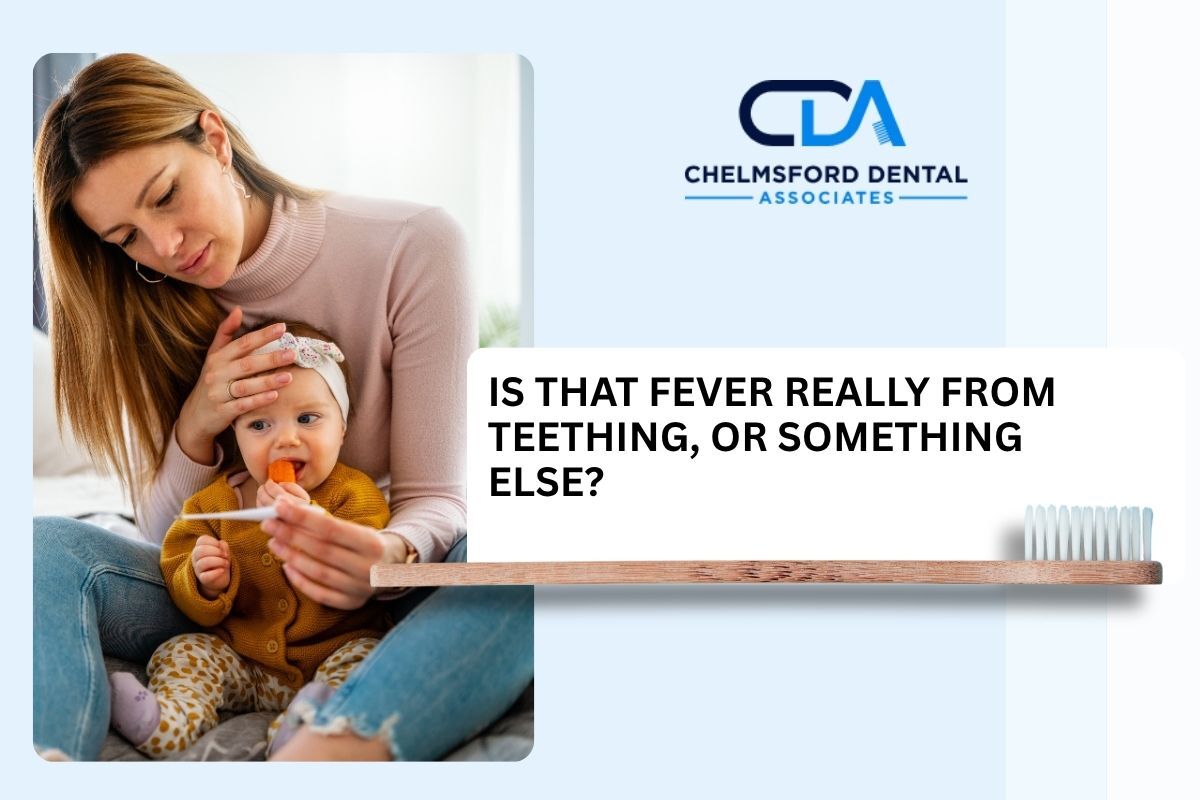
A true fever is generally not caused by teething. Teething can cause mild irritability, drooling, gum swelling, and sometimes a slightly warm feeling, but a temperature of 100.4°F or higher usually points to something else going on, like a cold, ear infection, or virus that happens to be showing up around the same time as a new tooth. This mix-up is incredibly common, and it’s one of the questions parents at our Chelmsford, MA practice ask most often.
Why Teething and Illness Get Confused So Easily
New teeth tend to erupt in the same stretch of early childhood when babies are also picking up their first colds, ear infections, and stomach bugs — largely because their immune systems are still developing and they’re putting everything in their mouths. So when a fever shows up the same week a tooth is coming through, it’s natural for parents to connect the two, even though the research doesn’t actually support teething as a fever cause on its own.
What Teething Actually Looks Like
Genuine teething symptoms tend to show up in a fairly consistent pattern:
- Increased drooling
- Swollen, tender, or reddened gums
- Mild irritability or fussiness, especially in the evening
- A strong urge to chew on fingers, toys, or anything within reach
- Slightly disrupted sleep for a few nights
- A very mild rise in temperature, sometimes described as feeling “warm,” but not a true fever
What Points to Something Else
If your child has any of the following, it’s worth looking beyond teething as the explanation:
- A temperature of 100.4°F or higher
- Diarrhea or vomiting
- A persistent cough or congestion
- A rash anywhere on the body
- Pulling at one or both ears
- Lethargy or being unusually difficult to comfort, beyond typical teething fussiness
None of this means teething and illness can’t happen at the same time — they often do — but a true fever should be treated as its own issue rather than assumed to be “just teeth.”
What to Do If You’re Not Sure
If you’re genuinely uncertain whether your child’s fever is teething-related or something more, a few steps can help you sort it out:
- Take an actual temperature reading rather than relying on how warm your child feels to the touch
- Check for other symptoms beyond fussiness, like congestion, rash, or changes in appetite
- Note how long the fever has lasted — teething-related warmth tends to be brief, while illness-related fevers often persist or climb
- When in doubt, call your child’s pediatrician rather than waiting it out, especially for fevers in infants under 3 months
Caring for a Teething Baby Without Confusing the Signals
A few simple, well-established methods can ease genuine teething discomfort without masking or complicating other symptoms:
- Gently rub your baby’s gums with a clean finger, damp cloth, or the back of a small, cool spoon
- Offer a clean teething ring for them to chew on
- Avoid liquid painkillers rubbed directly onto the gums, since your child could swallow more than intended
- Skip teething biscuits with added sugar, which can affect emerging teeth
- Keep a normal, gentle oral hygiene routine going even while your child is uncomfortable
When to Bring It Up at a Dental Visit
Fever and illness questions are best directed to your child’s pediatrician, but ongoing gum concerns, delayed tooth eruption, or general questions about oral development during the teething years are exactly what a visit with a family or pediatric dentistry office in Chelmsford is meant to cover. Bringing these details up at a routine visit helps build a fuller picture of your child’s overall dental development over time.
Questions About Your Child’s Teeth or Gums?
Sorting out fever from teething is really a pediatrician’s call, but if you’re noticing anything unusual with how your child’s teeth are coming in, a dentist in Chelmsford can take a look and help put your mind at ease. If you’re in the Chelmsford, MA area, Chelmsford Dental Associates welcomes new pediatric patients and is happy to answer questions about your child’s dental development. If you’re located elsewhere, the same guidance applies — bring your questions to your own family or pediatric dentist.
Call (978) 942-7599 to schedule a visit or ask a question about your child’s teeth.
Frequently Asked Questions
Can teething cause a low-grade fever?
Many parents notice a very slight rise in temperature during teething, but a true fever, generally 100.4°F or higher, is typically caused by something other than a new tooth coming in.
How long do normal teething symptoms usually last?
Discomfort around a single tooth erupting often lasts a few days to about a week, though the overall teething process spans many months as different teeth come in at different times.
Should I call the doctor every time my baby has a fever while teething?
It’s reasonable to monitor a mild, short-lived fever at home in an older infant, but persistent fevers, fevers in very young infants, or fevers with other symptoms are worth a call to your pediatrician.
Can teething cause diarrhea or a runny nose?
These symptoms are commonly attributed to teething by parents, but current guidance points to them being caused by something separate, like a mild illness happening around the same time.
What can I safely give my child for teething discomfort?
Gentle gum massage, a clean teething ring, and comfort measures are generally recommended first; always check with your pediatrician before giving any medication.