By Chelmsford Dental Associates | July 17, 2026
For families in Chelmsford, MA, learning why children can develop cavities despite brushing can help support healthier smiles. Brushing is essential, but it is only one part of cavity prevention. Brushing technique, fluoride exposure, frequent snacking, sugary drinks, tooth shape, and a child’s individual cavity risk can all affect oral health. Families looking for pediatric dentistry Chelmsford can benefit from understanding these factors and helping children build consistent oral care habits.
If your child has tooth pain, sensitivity, a visible dark spot, or signs of a possible cavity, contact Chelmsford Dental Associates at (978) 942-7599 for guidance. Early evaluation can help identify the cause and determine the appropriate next step.
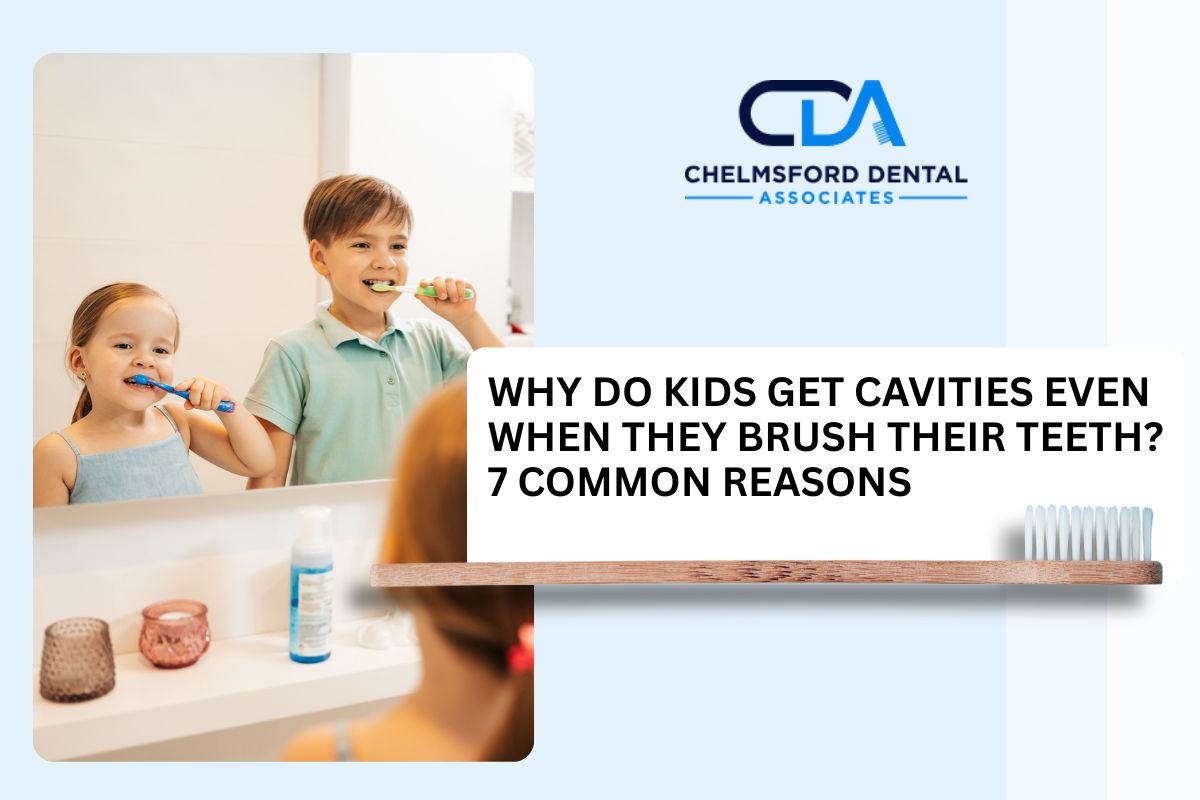
Why Do Kids Get Cavities Even When They Brush Their Teeth?
Kids can get cavities even when they brush because brushing may not remove all plaque, especially when teeth are missed or brushing is too brief. Frequent sugary snacks, sweet drinks, deep grooves in molars, limited fluoride exposure, and individual cavity risk can also contribute to tooth decay.
Cavities develop when bacteria in dental plaque use sugars and carbohydrates from food and drinks. These bacteria produce acids that weaken tooth enamel over time. Brushing helps remove plaque, but it cannot always eliminate every risk factor.
Children’s teeth can be vulnerable to decay soon after they erupt. The American Dental Association explains that tooth decay is influenced by several risk and protective factors, which is why two children with similar brushing habits may have different cavity experiences.
1. Brushing May Not Remove Plaque Completely
Children may brush every day but still miss certain surfaces. Commonly missed areas include:
- The back teeth
- The chewing grooves of molars
- The gumline
- The inside surfaces of teeth
- Areas between teeth
Young children often do not have the coordination needed to clean every surface thoroughly. They may brush only the front teeth because those are easier to see.
Parents should help or supervise brushing until the child can consistently clean all areas effectively. The ADA recommends brushing twice daily for two minutes with fluoride toothpaste.
2. Children May Brush for Too Little Time
A child may say they brushed their teeth, but the actual brushing time may be much shorter than recommended.
Quick brushing may leave plaque behind, particularly around the gumline and on the back teeth. A two-minute timer, a favorite song, or a child-friendly brushing app may make the routine easier.
Parents can also divide brushing into sections:
- Upper teeth
- Lower teeth
- Outside surfaces
- Inside surfaces
- Chewing surfaces
Helping children follow the same order each time can reduce the chance of missing areas.
How Long Should Kids Brush Their Teeth?
Most children should brush for about two minutes, twice a day, using fluoride toothpaste in an age-appropriate amount. Parents should assist or supervise younger children to make sure all tooth surfaces are cleaned.
3. Frequent Snacking Can Increase Cavity Risk
The amount of sugar a child eats matters, but how often a child eats sugary or starchy foods can also affect cavity risk.
Every time a child eats or drinks something containing sugar or fermentable carbohydrates, bacteria can produce acids that attack the enamel. Frequent snacking may give the teeth less time to recover between these acid exposures.
Foods that may contribute to frequent exposure include:
- Cookies and candy
- Sweetened cereal
- Crackers and chips
- Sticky fruit snacks
- Sweetened yogurt
- Granola bars
- Dried fruit
This does not mean children must avoid every treat. Creating regular meal and snack times may be more helpful than allowing frequent grazing throughout the day.
4. Sugary and Acidic Drinks May Affect Teeth
Some drinks can expose teeth to sugar or acid repeatedly, especially when a child sips them over a long period.
Common examples include:
- Soda
- Sports drinks
- Sweetened juice drinks
- Flavored milk
- Sweetened tea
- Energy drinks for older children
Even 100% fruit juice contains natural sugars and can contribute to frequent sugar exposure when consumed often.
Water is generally a good choice between meals. If a child drinks a sweet beverage, having it with a meal rather than sipping it throughout the day may reduce repeated exposure.

5. Some Teeth Are Naturally Harder to Clean
Back teeth often have deep pits and grooves. Food particles and plaque may become trapped in these areas even when a child brushes carefully.
Molars are especially important because they do much of the chewing and are located farther back in the mouth. Children may have difficulty reaching them with a toothbrush.
Dental sealants may help protect the chewing surfaces of certain molars by creating a protective barrier over deep grooves. The pediatric dentistry services at Chelmsford Dental Associates include sealants to help reduce food and plaque buildup in these areas.
6. Fluoride May Be Missing From the Routine
Fluoride helps strengthen tooth enamel and can support the repair of early enamel changes. Brushing with fluoride toothpaste provides more cavity protection than brushing alone.
The ADA recommends:
- A rice-grain-sized smear of fluoride toothpaste for children younger than 3
- A pea-sized amount for children ages 3 to 6
- Adult supervision to help children use the correct amount and avoid swallowing toothpaste
The child’s dentist may recommend additional fluoride support based on cavity risk, age, oral health, and other factors.
7. Every Child Has a Different Cavity Risk
Some children are more likely to develop cavities even when their brushing routine appears consistent.
Cavity risk may be influenced by:
- Previous cavities
- Tooth shape and deep grooves
- Frequent snacking
- Dry mouth
- Orthodontic appliances
- Difficulty cleaning certain teeth
- Limited fluoride exposure
- Family oral health patterns
- Changes in oral bacteria
A child who has had cavities before may need a more personalized prevention plan. Regular dental visits allow the dentist to evaluate risk and recommend care based on the child’s needs.
How Can Parents Help Prevent Cavities?
Parents can support healthier teeth by combining good brushing habits with healthy daily routines.
Create a Consistent Brushing Routine
Brush twice a day with fluoride toothpaste. Help younger children clean their teeth, especially the back molars and gumline.
Encourage Water Between Meals
Water can help rinse away food particles and reduce repeated exposure to sugary drinks.
Limit Frequent Snacking
Offer planned meals and snacks instead of allowing children to eat small amounts throughout the day.
Clean Between Teeth When Needed
When two teeth touch, a toothbrush may not clean the area between them effectively. Ask the dentist whether flossing or another cleaning method is appropriate.
Keep Regular Dental Visits
Routine visits allow dental professionals to identify early changes before they become painful or require more extensive treatment. The practice recommends regular checkups and cleanings based on each child’s needs.
What Should I Do If I Am Searching for a Dentist Near Me for My Child?
If you are searching for a dentist near me because your child has a toothache, sensitivity, discoloration, or a possible cavity, do not wait for symptoms to become more severe.
A dental examination can help determine whether the problem is related to tooth decay or another condition. Early care may allow treatment before the cavity becomes larger or affects the deeper part of the tooth.
Parents can learn more about pediatric dentistry Chelmsford and the preventive services available for growing smiles.
When Should a Child See a Dentist for a Possible Cavity?
Contact a dental office if your child has:
- Tooth pain or sensitivity
- A white, brown, or dark spot on a tooth
- A visible hole or rough area
- Pain while chewing
- Swelling near a tooth or gum
- Persistent bad breath
- A broken or chipped tooth
- Difficulty eating because of discomfort
A cavity may not always cause pain in its early stages. Regular examinations can help detect concerns before symptoms develop.
Healthy Brushing Is Only Part of Cavity Prevention
Children can develop cavities even when they brush because tooth decay is influenced by more than brushing alone. Brushing technique, fluoride, diet, snack frequency, tooth anatomy, and individual cavity risk all play a role.
For families seeking pediatric dentistry, regular preventive care can help identify risks early and support healthy habits as children grow. Encourage consistent brushing, supervise younger children, limit frequent sugary snacks and drinks, and keep up with recommended dental visits.
Frequently Asked Questions
1. Can a child get a cavity if they brush twice a day?
Yes. Brushing twice a day is important, but cavities can still develop when plaque is missed, brushing is too brief, or other risk factors are present. Diet, fluoride exposure, tooth shape, and previous cavities may also affect risk.
2. Why does my child get cavities when their sibling does not?
Children can have different tooth shapes, oral bacteria, eating habits, fluoride exposure, and cavity risks. A dentist can evaluate each child individually and recommend appropriate preventive care.
3. Are baby teeth really important if they eventually fall out?
Yes. Baby teeth support chewing, speech development, and space for permanent teeth. Cavities in baby teeth can cause pain, infection, and difficulty eating if left untreated.
4. Should parents brush their child’s teeth?
Parents should assist or supervise brushing while children are still developing the coordination needed to clean every surface effectively. The amount of help needed varies by age and skill.
5. Can a cavity heal without a filling?
Very early enamel changes may sometimes be managed with fluoride and improved oral hygiene, depending on the situation. Once a cavity has formed a hole in the tooth, it generally requires professional treatment.