By Chelmsford Dental Associates | August 10, 2026
A large cavity can raise an important question for parents: Does my child need a filling, or is a dental crown a better option? The answer depends largely on how much of the tooth has been affected and how much healthy tooth structure remains.
For families seeking pediatric dentistry in Chelmsford, understanding the difference between fillings and crowns can make a dental recommendation easier to understand. At Chelmsford Dental Associates, the dental team evaluates each child’s tooth individually to determine the most appropriate treatment.
A crown is not automatically necessary whenever a child has tooth decay. Smaller cavities can often be treated with white composite fillings, while larger cavities, particularly those affecting back teeth and molars, may require a stainless steel crown.
What Is a Dental Crown for a Child?
A dental crown is a restoration that covers a damaged or significantly weakened tooth. Rather than restoring only the cavity itself, a crown provides broader coverage and protection for the remaining tooth structure.
Children may need this type of restoration when tooth decay has affected a substantial portion of the tooth. Because baby teeth still serve important functions while a child grows, preserving a damaged tooth can sometimes be preferable to removing it prematurely.
The type of restoration recommended depends on the condition and location of the tooth. Your child’s dentist will examine the tooth and determine whether a filling or crown provides the appropriate level of protection.
Why Would a Child Need a Dental Crown?
Tooth decay is one of the most common reasons a child may require a dental crown. When decay is relatively small, a white composite filling may be enough to restore the affected area.
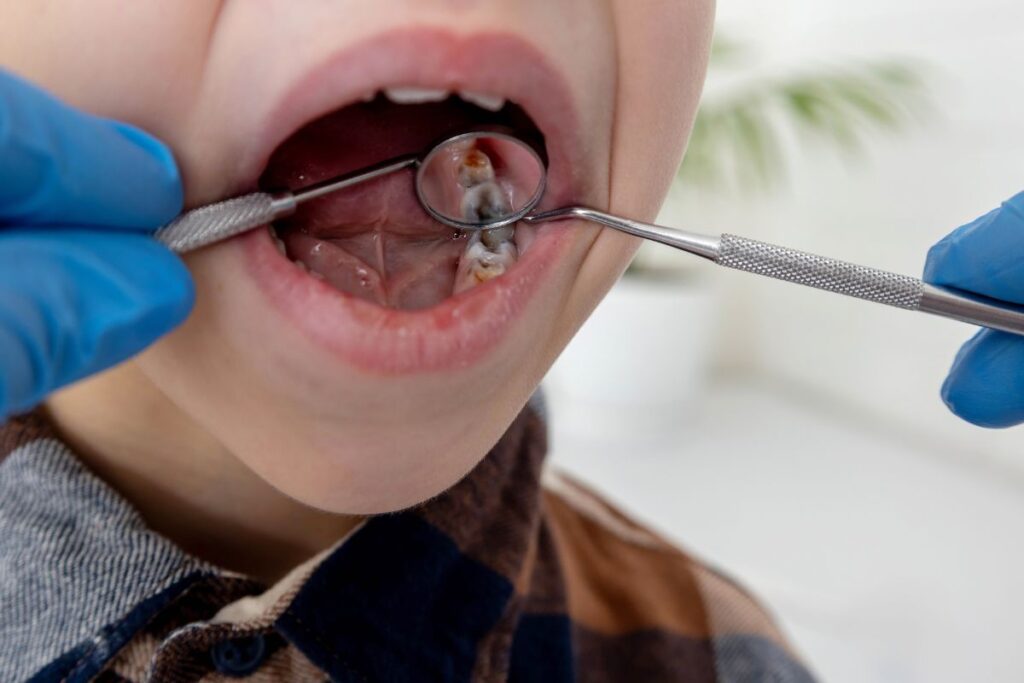
A larger cavity is different. Extensive decay can weaken the tooth to the point where a filling may not provide sufficient protection. In these situations, a stainless steel crown may be recommended, especially when the affected tooth is a molar or another back tooth that experiences significant chewing pressure.
A crown may therefore be considered when:
- Decay has affected a large portion of the tooth
- The remaining tooth structure needs additional protection
- A back tooth or molar has extensive decay
- Restoring the tooth is considered appropriate instead of removing it
The recommendation is based on the individual tooth rather than simply your child’s age.
Dental Filling vs. Dental Crown
Parents often wonder why a dentist cannot simply place a filling whenever a cavity develops. The main difference is the extent of the damage.
A white composite filling is generally appropriate for smaller cavities. The dentist removes the decayed portion and restores the space with filling material.
A crown provides more extensive coverage. When a cavity has weakened a large portion of the tooth, covering the tooth can provide additional support and protection.
Think of the treatments as serving different purposes:
Small cavity: A white filling may be sufficient.
Large cavity: A stainless steel crown may provide the additional coverage needed.
The dentist’s examination determines which approach is appropriate. Treating a cavity early may also help prevent the decay from becoming extensive enough to require more involved restorative care.
Why Baby Teeth Still Need Treatment
One of the most common misconceptions parents have is that cavities in baby teeth are not a major concern because those teeth will eventually fall out.
Although baby teeth are temporary, they still matter during your child’s development. They help children chew food, support normal speech development, and maintain space while permanent teeth develop.
When a baby tooth becomes severely damaged by decay, simply leaving it untreated is not necessarily the best approach. Decay can continue progressing and may eventually cause discomfort or infection.
If the tooth can be appropriately restored, treatment may help preserve it until it naturally makes way for the permanent tooth.
Why Stainless Steel Crowns Are Used for Children
Stainless steel crowns are commonly used when a child’s back tooth has extensive decay. They are designed to cover the affected tooth and provide durable protection during the time the baby tooth remains in the mouth.
Their use is particularly practical for molars because these teeth handle considerable chewing forces. When significant decay has weakened a molar, a crown can provide coverage that a smaller restoration may not offer.
The appearance of stainless steel is different from a natural tooth, but these crowns are used primarily for their protective and restorative function. Since baby teeth are eventually replaced by permanent teeth, the restoration is intended to serve the tooth during its remaining functional period.
How Does the Dentist Decide If a Crown Is Necessary?
A dental crown should never be recommended simply because a child has a cavity. The condition of the tooth needs to be evaluated first.
During a child’s dental examination, the dentist can assess the visible tooth structure and determine how extensive the decay is. Dental X-rays may also be used when necessary to provide additional information that cannot be seen during a visual examination.
This evaluation helps the dental team determine whether the tooth can be restored with a white filling or whether the amount of damage makes a crown more appropriate.
Regular dental visits are especially useful because they allow developing problems to be identified before they become more extensive.
Preventing the Need for Dental Crowns
Not every dental crown can be prevented, but good preventive habits can reduce the risk of extensive tooth decay.
Parents can help protect their child’s teeth by making oral hygiene part of the daily routine. Children should brush regularly using appropriate fluoride toothpaste, with parents helping or supervising when necessary.
Diet also plays a role. Frequent exposure to sugary foods and drinks can increase the risk of cavities. Offering nutritious meals and snacks while limiting frequent sugary exposures can support better oral health.
Regular professional dental care is equally important. Pediatric checkups allow the dental team to monitor developing teeth, identify early decay, and provide preventive services when appropriate.
The Role of Fluoride in Children’s Dental Care
Fluoride is an important part of cavity prevention because it helps strengthen tooth enamel and makes teeth more resistant to acid attacks associated with tooth decay.
Professional fluoride treatments may be recommended based on your child’s individual needs. At-home brushing with fluoride toothpaste also provides daily protection.
Parents should follow their dental provider’s recommendations regarding fluoride because the appropriate approach can vary depending on a child’s age, oral health, and other factors.
Can Dental Sealants Help Protect Children’s Teeth?
Dental sealants are another preventive option that may help protect certain teeth from cavities.
Molars have grooves and pits where food particles and plaque can collect. These areas can sometimes be difficult for children to clean thoroughly with a toothbrush.
A dental sealant creates a protective barrier over susceptible chewing surfaces, helping reduce the opportunity for bacteria and food particles to remain in those grooves.
Sealants do not replace brushing or regular dental visits, but they can be a useful part of a broader preventive care plan when appropriate.
What Happens If a Baby Tooth Is Lost Too Early?
Sometimes a tooth becomes too damaged to preserve or is lost prematurely for another reason. When a baby tooth disappears earlier than expected, the space it occupied may need to be monitored.
Your child’s dentist may recommend a space maintainer in appropriate situations. The purpose is to help preserve the space needed for the developing permanent tooth.
This is another reason not to assume that losing or removing a baby tooth is always a simple matter. The timing of tooth loss and the development of the permanent teeth both need to be considered.
When Should Parents Schedule an Appointment?
Children do not always experience noticeable symptoms when a cavity begins developing. Waiting for tooth pain can therefore mean that decay has already progressed.
Parents should schedule an evaluation if they notice:
- A visible cavity or darkened area on a tooth
- A chipped or damaged tooth
- Sensitivity or discomfort
- Difficulty chewing
- Swelling around a tooth
- A change in the appearance of the tooth
- A dental injury
A professional examination can determine what is actually happening and whether treatment is needed.
Regular checkups are also important even when your child appears to have healthy teeth. Preventive appointments provide an opportunity to monitor oral development and address small concerns before they become larger problems.
How Parents Can Make Dental Care Easier
Parents can help children develop positive dental habits by keeping oral care consistent and predictable.
Rather than waiting until a child experiences a dental problem, make routine checkups part of normal healthcare. Encourage brushing twice daily, help younger children clean areas they may miss, and make healthy food and drink choices part of everyday life.
It is also helpful to avoid presenting dental treatment as something frightening. If your child needs a filling or crown, allowing the dental team to explain the procedure in an age-appropriate way can help reduce unnecessary worry.
The goal is to make dental care a normal part of growing up.
Protect Your Child’s Teeth Before a Small Cavity Becomes a Bigger Problem
A dental crown can be an important restorative option when a child’s tooth has been significantly weakened by decay. For smaller cavities, a white filling may be sufficient, while larger cavities affecting back teeth or molars may require a stainless steel crown.
The most effective way to reduce the likelihood of extensive decay is to focus on prevention from the beginning. Regular brushing, healthy dietary habits, fluoride care, dental sealants when appropriate, and routine dental examinations all contribute to better childhood oral health.
If your child has a visible cavity, damaged tooth, sensitivity, or another dental concern, don’t wait for the problem to become painful. Schedule an evaluation with a Chelmsford pediatric dental provider to find out whether your child needs a filling, crown, or another type of care. Early evaluation can help protect the affected tooth and support your child’s developing oral health.