By Chelmsford Dental Associates | April 3, 2026
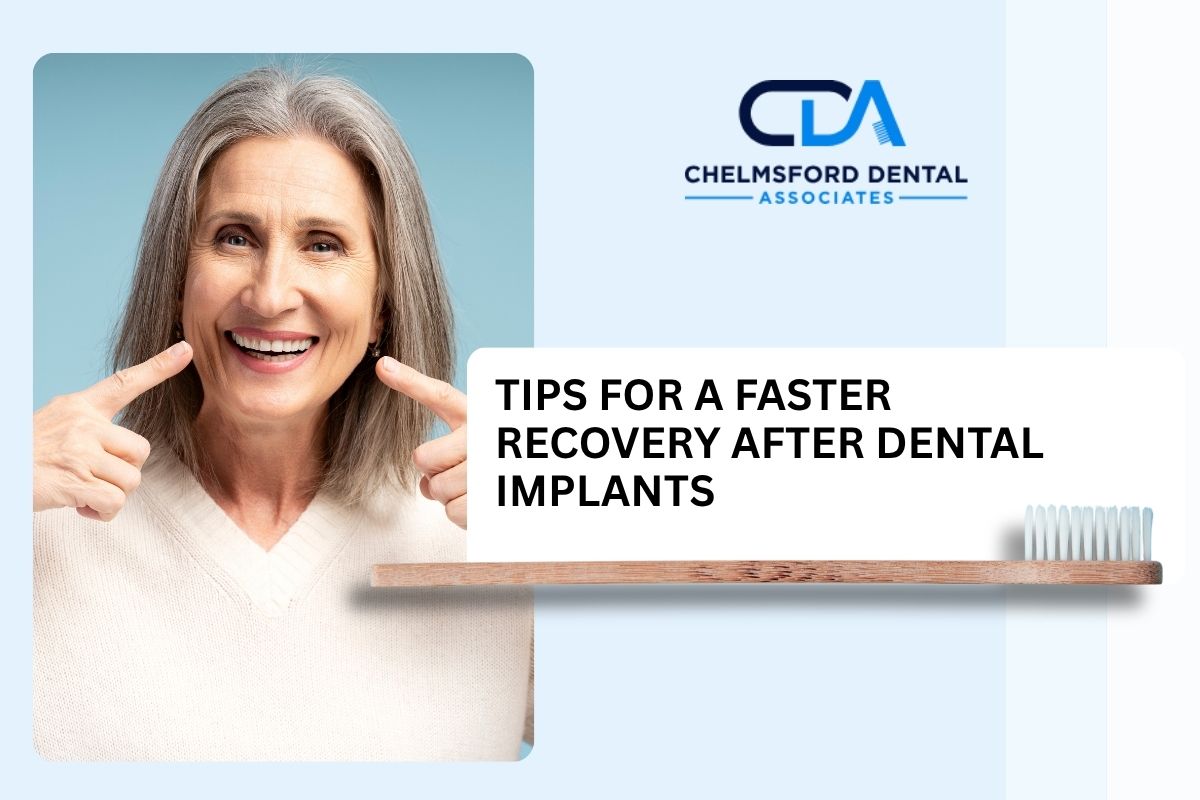
Dental implants are one of the most reliable and long-lasting ways to restore your smile—but what happens after the procedure matters just as much as the treatment itself. Recovery plays a huge role in how well your implants heal, how comfortable you feel, and how quickly you can get back to your normal routine.
If you’ve recently had implants placed or you’re planning to, this guide will walk you through simple, practical tips to speed up healing and avoid complications—for all the patients and nearby communities.
Why Recovery After Dental Implants Matters
Dental implants are designed to fuse with your jawbone through a process called osseointegration. While this sounds technical, it simply means your body is building a strong foundation for your new tooth.
The better you care for your mouth during this phase, the stronger and more successful your implant will be.
Within the first few days after surgery, it’s normal to experience:
- Mild swelling
- Minor bleeding
- Some discomfort
Following the right steps can reduce these symptoms and help you heal faster.
1. Follow Post-Procedure Instructions Carefully
Your dentist will provide specific aftercare instructions—and they’re not just suggestions.
These guidelines are tailored to your case and may include:
- When to eat and drink
- How to clean your mouth
- Medications to take
Following these instructions closely helps reduce the risk of complications and supports faster healing. Since every implant procedure is slightly different, sticking to your dentist’s advice ensures your recovery stays on track. If anything feels unclear or unusual during the healing process, don’t hesitate to contact your dental provider for guidance—timely support can make a significant difference in your overall result.
2. Give Your Body Time to Rest
Your body heals best when it’s not under stress.
For at least 48–72 hours after your procedure:
- Avoid strenuous activity
- Skip workouts and heavy lifting
- Get plenty of sleep
This helps reduce swelling and prevents unnecessary pressure on the implant site.
3. Stick to Soft Foods (At Least Initially)
What you eat directly affects your recovery.
For the first few days, choose foods that are:
- Soft
- Easy to chew
- Nutrient-rich

Good options include:
- Yogurt
- Mashed potatoes
- Scrambled eggs
- Smoothies (avoid using straws)
Avoid:
- Crunchy foods
- Sticky snacks
- Very hot or spicy items
Gradually reintroduce solid foods as your dentist advises.
4. Keep the Area Clean—But Be Gentle
Oral hygiene is critical, but you don’t want to disturb the healing site.
Here’s how to strike the right balance:
- Brush your teeth gently, avoiding the implant area at first
- Use a soft-bristled toothbrush
- Rinse with a saltwater solution after 24 hours
Avoid aggressive rinsing or spitting, as this can interfere with healing.
5. Manage Swelling the Right Way
Swelling is completely normal after implant surgery.
To minimize it:
- Apply an ice pack to the outside of your cheek (15 minutes on, 15 minutes off)
- Keep your head elevated while resting
- Stay hydrated
Most swelling peaks within 48 hours and then begins to subside.
6. Take Medications as Directed
Your dentist may prescribe:
- Pain relievers
- Antibiotics
Take them exactly as instructed—even if you start feeling better. This helps prevent infection and keeps discomfort under control.
Avoid self-medicating or skipping doses.
7. Avoid Smoking and Alcohol
This is one of the most important factors in recovery.
Smoking can:
- Slow down healing
- Increase the risk of implant failure
- Affect blood flow to the gums
Alcohol can interfere with medications and irritate the surgical site.
If possible, avoid both for at least a week—or longer if recommended.
8. Stay Hydrated and Eat Nutritious Foods
Your body needs the right fuel to heal.
Focus on:
- Protein-rich foods
- Fruits and vegetables
- Plenty of water
Proper nutrition helps rebuild tissue and supports the integration of your implant.
9. Watch for Warning Signs
While most recoveries go smoothly, it’s important to stay alert.
Contact your dentist if you notice:
- Severe or worsening pain
- Excessive bleeding
- Signs of infection (fever, pus, unusual swelling)
- Implant feeling loose
If you’re in Chelmsford or nearby areas, having access to local, same-day dental care can make a big difference in addressing concerns quickly.
10. Attend Follow-Up Appointments
Your follow-up visits are just as important as the procedure itself.
During these visits, your dentist will:
- Check healing progress
- Ensure the implant is integrating properly
- Address any concerns early
Skipping appointments can lead to complications that are harder to fix later.
Local Insight: Recovery Tips for Patients
Living comes with its own lifestyle pace—busy work schedules, commuting, and seasonal weather changes.
Here are a few local-friendly tips:
- Plan your procedure around a lighter workweek
- Stock up on soft foods from nearby grocery stores before your appointment
- Avoid outdoor exertion during extreme weather (hot summers or cold winters)
Patients who prepare ahead often experience a smoother recovery.
Final Thoughts
Recovering from dental implants doesn’t have to be complicated. With the right care, most patients heal comfortably and enjoy long-lasting results.
Small habits—like eating the right foods, keeping the area clean, and attending follow-ups—can make a big difference in your outcome.
If you’re considering implants or want to ensure your recovery is on track, taking the next step toward professional guidance can help you feel more confident about your smile journey.
Frequently Asked Questions (FAQs)
1. How long does it take to recover from dental implants?
Initial healing usually takes 1–2 weeks, but full integration with the jawbone can take 3–6 months.
2. Can I go back to work the next day?
Many patients can return to light work within 24–48 hours, depending on how they feel. However, physically demanding jobs may require more time off.
3. Is pain normal after dental implants?
Yes, mild to moderate discomfort is normal for a few days and can be managed with prescribed medication.
4. When can I eat normally again?
You can gradually return to normal eating within a week, but follow your dentist’s advice for your specific case.
5. What should I avoid during recovery?
Avoid:
- Smoking
- Alcohol
- Hard or crunchy foods
- Strenuous activity
6. How do I know if my implant is healing properly?
Signs of proper healing include reduced swelling, minimal discomfort, and no signs of infection. Regular check-ups help confirm everything is progressing well.