By Chelmsford Dental Associates | April 10, 2026
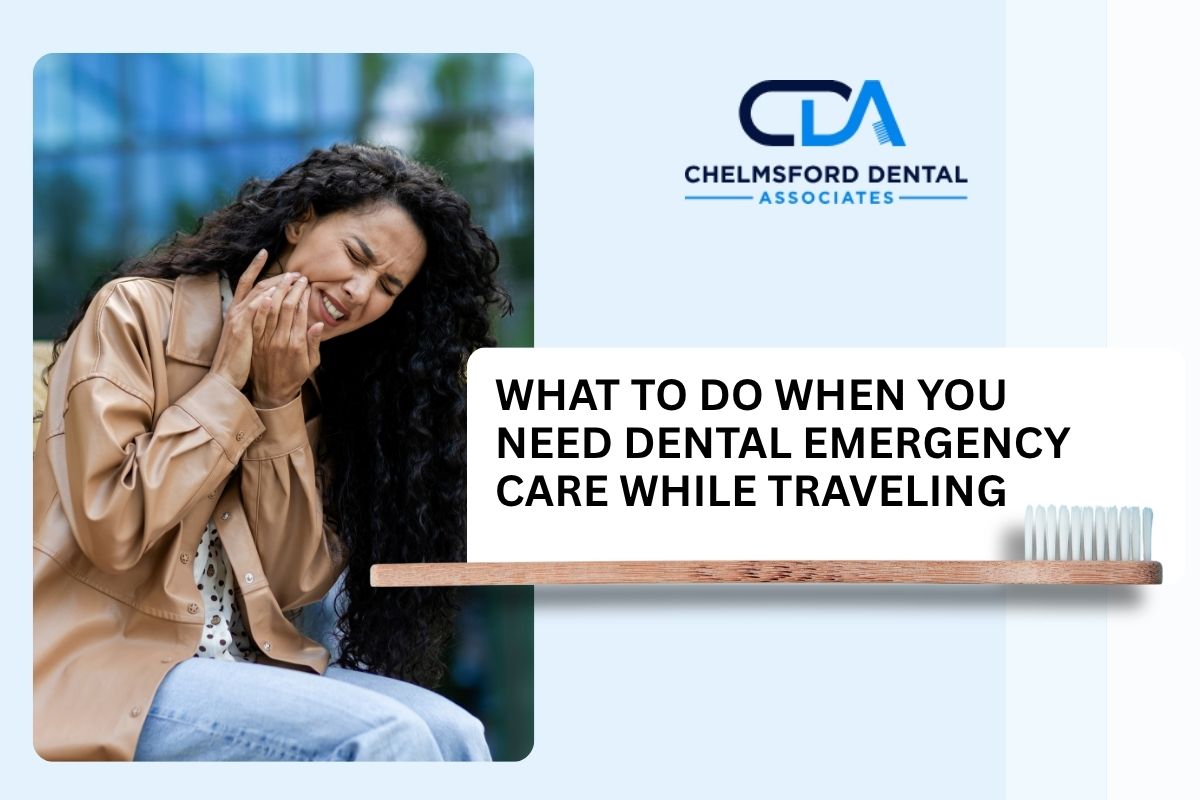
Traveling is exciting—new places, new experiences, and a break from routine. But a sudden dental emergency can quickly turn your trip into a stressful situation. Whether it’s a severe toothache, a broken tooth, or a lost filling, knowing what to do can make all the difference.
If you ever find yourself dealing with a dental issue away from home, this guide will help you stay calm, act quickly, and protect your smile—no matter where you are.
Common Dental Emergencies While Traveling
Dental problems don’t wait for a convenient time. Some of the most common emergencies travelers face include:
- Severe toothache
- Chipped or broken tooth
- Lost crown or filling
- Knocked-out tooth
- Swelling or infection
Recognizing the urgency of your situation is the first step toward getting the right care.
1. Stay Calm and Assess the Situation
The first thing to do is not panic.
Take a moment to:
- Identify the type of dental issue
- Check for bleeding or swelling
- Rate your level of pain
A clear understanding of the problem helps you decide your next steps more effectively.
2. Use Quick At-Home Remedies for Temporary Relief
While these are not permanent solutions, they can help manage discomfort until you see a dentist:
- Toothache: Rinse your mouth with warm saltwater
- Swelling: Apply a cold compress to the outside of your cheek
- Broken tooth: Rinse gently and avoid chewing on that side
- Lost filling/crown: Use temporary dental cement (available at pharmacies)
Avoid using sharp objects or applying pressure to the affected area.
3. Find a Local Dentist Immediately
When you’re away from home, searching for a reliable dental provider is essential.
Look for:
- Clinics offering same-day or emergency appointments
- Good patient reviews
- Convenient location near your hotel or travel route
If you’re traveling near your home base or returning soon, contacting an emergency dentist can help you plan immediate or follow-up care with a trusted provider.
4. Know When It’s a True Emergency
Some dental issues require urgent attention and shouldn’t be delayed.
Seek immediate care if you have:
- Uncontrolled bleeding
- Severe pain that doesn’t subside
- A knocked-out tooth
- Signs of infection (fever, swelling, bad taste)
Acting quickly can prevent long-term damage.
5. Handle a Knocked-Out Tooth the Right Way
A knocked-out tooth is one of the most time-sensitive dental emergencies.
Here’s what to do:
- Pick up the tooth by the crown (not the root)
- Rinse gently with water (do not scrub)
- Try to place it back in the socket if possible
- If not, store it in milk or saliva
- See a dentist within 30–60 minutes
Quick action can sometimes save the tooth.
6. Avoid Making the Problem Worse
While traveling, it’s easy to unintentionally worsen a dental issue.
Avoid:
- Chewing hard foods
- Ignoring persistent pain
- Taking random medications without guidance
- Using DIY fixes that aren’t safe
Stick to temporary care until you can see a professional.
7. Keep a Travel Dental Kit Handy
Preparation can make emergencies easier to manage.
Consider packing:
- Pain relievers
- Gauze
- Temporary dental cement
- Salt packets
- A small cold pack
This is especially helpful for frequent travelers or families with kids.
8. Contact Your Regular Dentist for Guidance

Even if you’re far from home, your regular dentist can still help.
They may:
- Provide advice over the phone
- Recommend treatment steps
- Coordinate care with a local provider
If you usually visit a provider for emergency dental care in Chelmsford—or wherever you live—they can guide you on what to do next and what to expect when you return.
9. Plan for Follow-Up Care After Your Trip
Temporary fixes are just that—temporary.
Once you’re back home:
- Schedule a full dental evaluation
- Complete any pending treatment
- Address the root cause of the issue
Delaying follow-up care can lead to bigger problems later.
Local Insight: Why Having a Trusted Dentist Matters
If you live in or around Chelmsford, having a reliable dental team before you travel can make emergencies much less stressful.
Knowing where to turn—whether it’s for advice, records, or urgent care—gives you peace of mind. Many local practices offer same-day emergency appointments, making it easier to get treated quickly when you return.
Final Thoughts
Dental emergencies can be unpredictable, especially when you’re away from home. But with the right approach—staying calm, acting quickly, and seeking professional care—you can manage the situation effectively.
Preparation and awareness go a long way in protecting your smile, no matter where your travels take you.
If you want to feel more confident before your next trip, having a trusted dental provider you can rely on makes all the difference.