
By Chelmsford Dental Associates | June 12, 2026
Getting dentures for the first time can feel like a big adjustment for many patients. Whether tooth loss happened gradually or more recently, it is normal to have questions about comfort, eating, speaking, and daily life with dentures.
Many people are unsure what the process actually involves before treatment begins. Understanding what to expect ahead of time can help reduce anxiety and make the transition feel more manageable.
If you are exploring dentures in Chelmsford, learning about the adjustment process, care routine, and common experiences can help you feel more prepared before starting treatment.
Why Patients Need Dentures
Dentures are used to replace missing teeth and help restore daily functions like chewing and speaking. Missing teeth can also affect facial appearance and bite alignment over time.
Patients may consider dentures because of:
- Extensive tooth loss
- Severe tooth damage
- Gum disease
- Aging-related dental concerns
- Difficulty chewing comfortably
Dentures are customized to fit the patient’s mouth and are designed to improve both function and appearance.
The First Step Usually Starts With a Consultation
Before dentures are created, the dentist will examine your oral health, gums, jaw structure, and remaining teeth.
This appointment may include:
- Dental X-rays
- Oral examination
- Discussion about denture options
- Impressions of the mouth
- Treatment planning
Some patients receive full dentures, while others may need partial dentures depending on how many healthy teeth remain.
Patients often feel more comfortable once they understand the overall process and timeline involved.
It Takes Time to Adjust to Dentures
One of the most important things patients should know is that dentures can feel unusual at first.
During the first several weeks, it is common to notice:
- Mild soreness
- Increased saliva production
- A feeling of fullness in the mouth
- Minor speaking difficulties
- Slight irritation in certain areas
These changes are often part of the normal adjustment period as the mouth becomes more familiar with the dentures.
Most patients gradually adapt with time and regular wear.
Eating With Dentures Feels Different Initially
Chewing with dentures may require some patience during the early stages.
Dentists often recommend starting with softer foods while adjusting to the new appliance.

Patients commonly begin with foods such as:
- Mashed potatoes
- Eggs
- Pasta
- Yogurt
- Rice
- Cooked vegetables
Cutting food into smaller pieces and chewing slowly may also help improve comfort while adapting to dentures.
As confidence improves, many patients gradually return to a wider variety of foods.
Speaking May Feel Unusual at First
Some patients notice slight speech changes after receiving dentures, especially with certain words or sounds.
This happens because the tongue and mouth muscles are adjusting to the new shape and positioning inside the mouth.
Reading aloud and practicing conversation can help patients adapt more comfortably over time.
For most people, speech becomes more natural as they continue wearing the dentures regularly.
Denture Fit May Require Adjustments
Even carefully made dentures sometimes need adjustments after placement.
As the mouth adapts, certain areas may create pressure spots or irritation. Dentists often schedule follow-up visits to evaluate comfort and make small fit modifications if necessary.
Patients should avoid trying to adjust dentures themselves at home, since improper changes can affect fit and comfort.
Routine dental visits remain important even after getting dentures.
Cleaning Dentures Is Important
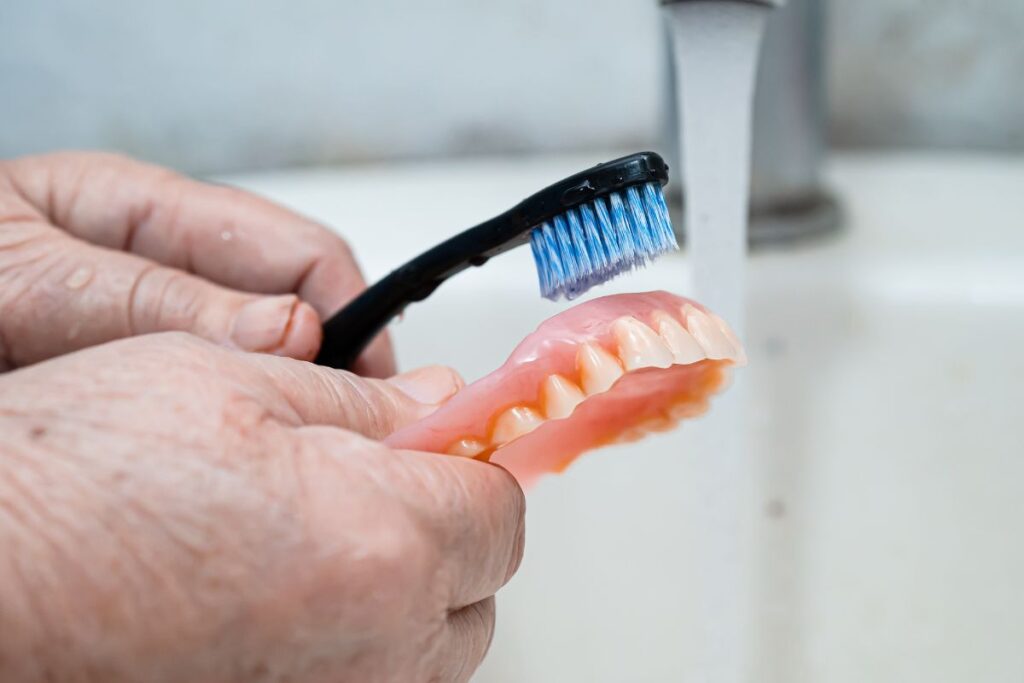
Dentures still require daily cleaning to help maintain oral hygiene and reduce odor-causing bacteria.
Dentists usually recommend:
- Rinsing dentures after meals
- Brushing dentures gently
- Soaking them as instructed
- Cleaning the gums and tongue regularly
Keeping dentures clean helps support both comfort and long-term oral health.
Gum and Mouth Care Still Matter
Even without natural teeth, oral health care remains important.
Patients should continue monitoring:
- Gum health
- Irritation
- Sore spots
- Mouth infections
- Changes in fit
Regular dental visits help ensure dentures continue fitting properly while allowing dentists to monitor the overall condition of the mouth and gums.
Emotional Adjustment Is Normal Too
For some patients, adapting to dentures involves more than physical changes.
Tooth loss can affect confidence, social comfort, and daily routines. It is common for patients to need time adjusting emotionally as well as physically.
Many people gradually feel more comfortable once they become familiar with speaking, eating, and smiling with dentures.
Supportive dental care and realistic expectations can make the transition feel less stressful.
Modern Dentures Look More Natural
Many patients worry that dentures will look artificial or obvious.
Modern dentures are designed to look more natural than older styles from past decades. Dentists consider factors like:
- Tooth shape
- Gum appearance
- Facial balance
- Smile proportions
- Natural tooth color
The goal is usually to create a smile that feels comfortable and natural for the patient rather than overly noticeable.
How Long Dentures Last
Dentures are durable, but they may eventually need adjustments, relining, or replacement over time.
Changes in the jawbone and gums can gradually affect how dentures fit.
Patients should continue scheduling regular dental evaluations to monitor:
- Denture condition
- Oral tissue health
- Fit and comfort
- Wear over time
Good maintenance habits may help dentures stay comfortable longer.
Denture Care
Patients considering dentures often have concerns about comfort, appearance, and adjusting to daily life after tooth replacement.
At Chelmsford Dental Associates, patients receive personalized care focused on helping them understand their treatment options while supporting long-term oral health and comfort.
For individuals looking into dentures in Chelmsford, discussing treatment expectations and fit concerns with a dental professional can help make the process feel more manageable and informed.
Schedule a Denture Consultation
Getting dentures for the first time is an adjustment, but understanding the process ahead of time can help patients feel more prepared and confident about treatment.
If you are exploring tooth replacement options or want to learn more about dentures in Chelmsford, scheduling a consultation can help you better understand the next steps and available treatment recommendations.
To schedule an appointment with us, call +1 (978) 942-7599 or visit us.
FAQs
How long does it take to adjust to dentures?
Many patients adjust gradually over several weeks as the mouth becomes more familiar with wearing dentures.
Will dentures affect the way I speak?
Some patients notice temporary speech changes initially, but speaking usually becomes more natural with practice.
Can I eat normally with dentures?
Most patients gradually return to a wider variety of foods after adjusting to chewing with dentures.
Do dentures need special cleaning?
Yes. Dentures should be cleaned daily to help maintain hygiene and reduce bacteria buildup.
Will dentures need replacement over time?
Dentures may eventually require adjustments or replacement as the mouth and jaw naturally change over time.