By Chelmsford Dental Associates | July 10, 2026
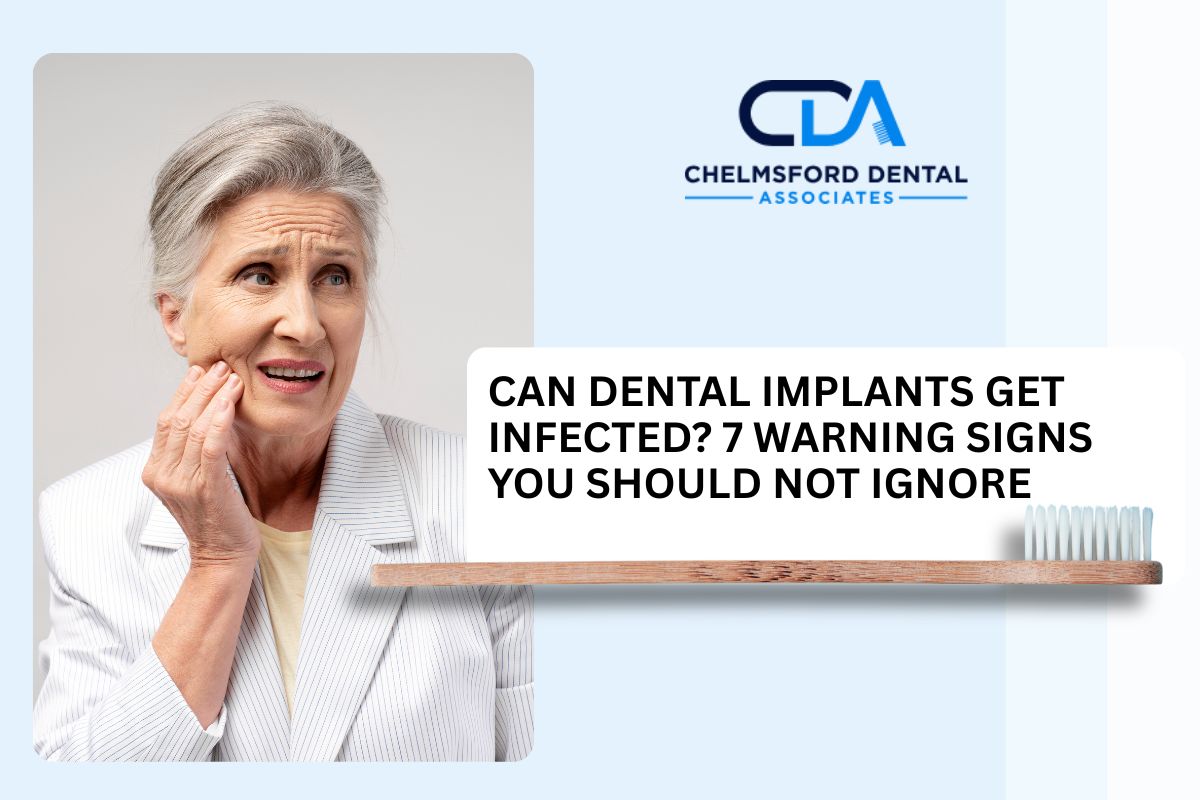
If you have an implant and notice bleeding, swelling, tenderness, or discomfort around it, you may be asking, can dental implants get infected? Yes. Although dental implants are designed to provide long-lasting support, the gums and bone surrounding an implant can become inflamed or infected when harmful bacteria build up.
Some early symptoms may seem minor, but they should not be ignored. Recognizing the warning signs and seeking care promptly may help protect the tissues that support your implant.
Can Dental Implants Get Infected?
Yes, dental implants can develop an infection in the gums and bone surrounding the implant. The implant itself cannot develop a cavity, but plaque and bacteria can collect around the implant crown and below the gumline. If inflammation is not addressed, it may affect the bone supporting the implant.
Early inflammation around an implant is often called peri-implant mucositis. When the condition progresses and causes bone loss, it is known as peri-implantitis.
Dental implants require consistent home care and professional maintenance because the surrounding gums and bone are essential to keeping the implant stable. The American Dental Association recognizes peri-implant diseases as conditions that affect the tissues surrounding dental implants.
What Is Peri-Implantitis?
Peri-implantitis is an inflammatory condition that affects the soft tissue and bone around a dental implant. It may begin with bleeding or swelling and can progress to bone loss if it is not evaluated and treated.
The symptoms may not always be painful during the early stages. This is one reason regular dental visits are important, even when an implant feels normal.
Can Dental Implants Get Infected Years After Placement?
Yes. An implant infection may develop months or even years after treatment. The risk can be influenced by oral hygiene, gum health, tobacco use, a history of periodontal disease, and how consistently the implant is professionally maintained.
A dental implant that has remained comfortable for years can still develop new inflammation. Bleeding, swelling, or changes around the implant should be evaluated rather than dismissed.
7 Warning Signs of a Dental Implant Infection
1. Bleeding Around the Implant
Bleeding while brushing or cleaning around an implant may be an early sign of inflammation. If the bleeding continues, occurs repeatedly, or is accompanied by swelling, schedule a dental evaluation.
2. Red or Swollen Gums
Healthy gum tissue should not remain noticeably red, puffy, or tender. Persistent swelling may indicate that bacteria are irritating the tissue around the implant.
3. Persistent Bad Breath or an Unpleasant Taste
Ongoing bad breath or a bad taste may occur when bacteria accumulate around an implant. These symptoms do not always indicate an infection, but they should be discussed with a dental professional if they continue.

4. Pus or Drainage
Pus, drainage, or fluid around an implant may be a sign of an active infection. Do not rely only on mouthwash or home remedies. Contact a dental office for an evaluation.
5. Gum Recession
If the gums begin pulling away from the implant restoration, more of the implant components may become visible. Gum recession can have several causes, but it should be examined because it may be associated with tissue or bone loss.
6. New Pain or Pressure
A fully healed implant should generally feel comfortable during normal chewing. New pain, pressure, or tenderness may indicate inflammation, infection, bite-related stress, or another issue involving the implant restoration.
7. A Loose Implant or Change in Your Bite
An implant should not move. If you notice looseness, clicking, or a change in the way your teeth come together, contact a dentist promptly.
In some cases, the crown or connecting component may be loose while the implant remains stable. An examination is needed to determine the cause.
What Causes a Dental Implant Infection?
Several factors may increase the risk of inflammation around an implant, including:
- Inconsistent brushing and cleaning between teeth
- Plaque and tartar buildup
- Skipping regular dental visits
- A history of gum disease
- Tobacco use
- Difficulty cleaning around an implant bridge
- Excess pressure from grinding or clenching
- Certain health conditions that may affect healing
Plaque can collect on implant-supported crowns just as it can on natural teeth. Daily cleaning is essential because bacteria may gather around areas that are difficult to reach.
Can I Wait to Treat an Implant Infection?
No, persistent implant symptoms should not be ignored. Mild irritation may improve after better cleaning, but ongoing bleeding, swelling, pain, drainage, or changes around an implant require professional evaluation.
If inflammation progresses, it may affect the bone supporting the implant. Earlier care may provide more options for managing the condition.
If you are searching for an emergency dentist near me because of severe swelling, significant pain, drainage, or a loose implant, contact a dental office promptly. If swelling affects breathing or swallowing, seek emergency medical care immediately.
What Should I Do First?
If you notice a possible problem around an implant, follow these steps:
- Continue brushing gently around the area.
- Do not poke or press on swollen tissue.
- Do not attempt to tighten or adjust the implant restoration yourself.
- Contact a dental office and describe your symptoms.
- Schedule an examination as soon as possible.
A dentist may examine the gums, evaluate the implant restoration, check your bite, and take X-rays when needed.
What Should I Do If I Search for Dental Implants Near Me?
Many patients search for dental implants near me when they experience discomfort, bleeding, or another concern around an existing implant. If you are searching for local dental care in Chelmsford, look for a practice that can evaluate the implant, surrounding gum tissue, bite, and supporting bone.
An implant concern does not always mean the implant has failed. A loose crown, bite issue, gum inflammation, or buildup around the restoration may cause symptoms that need professional attention.
Proper long-term care is an important part of protecting an implant. Learn more about dental implant maintenance and how professional cleaning can support the health of implant-supported restorations.
How Can Dental Implant Infections Be Prevented?
Good daily care and regular dental visits can help reduce the risk of inflammation around an implant.
Helpful habits include:
- Brush twice a day with a soft-bristled toothbrush.
- Clean between teeth and around the implant every day.
- Use floss, interdental brushes, or other tools recommended by your dental team.
- Attend routine dental exams and professional cleanings.
- Avoid tobacco products.
- Report bleeding or swelling early.
- Wear a nightguard if recommended for grinding or clenching.
Implant restorations may have areas that require special cleaning techniques. Your dental team can recommend the tools that are appropriate for your specific restoration.
How Do I Know If I Need a Dentist Near Me?
If you have persistent bleeding, swelling, pain, drainage, gum recession, or a change in how your implant feels, it is time to contact a dental professional.
Many people search for dentist near me when new symptoms appear. For implant-related concerns, choose a local office that can evaluate the implant and the surrounding tissues rather than waiting to see whether the symptoms disappear.
Patients in Chelmsford, MA, and nearby communities such as Westford, Billerica, Lowell, and North Chelmsford should not assume that new implant symptoms will resolve without care. A timely examination can help identify the cause and guide the next step.
Protect Your Implant With Early Care
So, can dental implants get infected? Yes. Bacteria can affect the gums and bone surrounding an implant, especially when plaque is not removed consistently or inflammation is left untreated.
Bleeding, swelling, drainage, discomfort, gum recession, or changes around an implant should be evaluated as soon as possible. Regular home care and professional maintenance can help support long-term implant health.
Chelmsford Dental Associates is located at 18 North Rd. If you are experiencing implant-related symptoms or need routine implant maintenance, call (978) 256-2561 to request an appointment.
Frequently Asked Questions
1. Can a dental implant infection go away on its own?
Mild gum irritation may improve when plaque is removed, but a persistent infection should not be expected to resolve without professional care. A dental examination can determine whether the inflammation has affected the tissues supporting the implant.
2. Is a dental implant infection painful?
It can be painful, but not everyone experiences pain during the early stages. Bleeding, swelling, redness, or changes in the gums may appear before significant discomfort develops.
3. How long does it take for an implant infection to develop?
An implant infection may develop gradually over months or years. The timing varies based on oral hygiene, gum health, implant maintenance, tobacco use, and other individual factors.
4. Can antibiotics treat an infected dental implant?
Antibiotics may be used in certain situations, but they may not remove plaque, treat bone loss, or correct the underlying cause by themselves. A dentist must evaluate the implant before recommending treatment.
5. Can an infected dental implant be saved?
Some implants can be treated successfully, especially when inflammation is identified early. The outcome depends on the amount of bone loss, the condition of the implant, and the type of treatment needed.